The Billion-Dollar Hostile Takeover of the Football Weekend
Let’s be real for a second. The days of women tagging along to an away game just to freeze on a set of aluminum bleachers and eat a lukewarm hot dog are dead. Women currently engineer a massive chunk of a sports tourism sector on track to crack $1.33 trillion globally by 2032. Peek into the first-class cabin on any autumn Friday flight bound for Vegas or New Orleans. The demographic has completely flipped. Affluent, highly successful women—keep in mind that over 80% of female Fortune 500 CEOs played sports in their youth—are injecting billions into host cities. That simple three-hour Sunday broadcast is gone; in its place sits a multi-day economic juggernaut. Host cities used to scrape by with generic sports bars. Now, local hospitality sectors scramble to assemble boutique hotel buyouts, chef-driven tasting menus, and high-end retail collaborations just to win our wallets.
Spatial Displacement: Why Your Hotel Booking Strategy is Flawed
You might think snagging a boutique room three miles from the stadium is a brilliant way to escape the post-game chaos. Frankly, that is a rookie mistake that will wreck your entire itinerary. Industry analysts track a brutal little economic phenomenon called "spatial displacement" during these mega-events. Any property parked inside a one-mile radius of the stadium gates possesses the leverage to send its Average Daily Rates (ADR) to the moon. Regular-season matchups routinely spike local hotel prices by roughly 14%. Look back at when Vegas hosted the Super Bowl. If you wanted to stay right in the action downtown, you were shelling out around $747 a night—easily three times what it normally costs. But drive just ten or fifteen minutes away? Those hotels were basically charging their regular weekend rates. Suburban operators actually watch their demand evaporate, primarily because non-sports tourists actively dodge the city altogether to escape the gridlock.
Trying to cut corners by staying out in the suburbs is a guaranteed way to waste your Sunday morning stuck in traffic, racking up massive Uber surcharges. You really need to bite the bullet and book a room right downtown. Consider the Omni in Nashville or Pittsburgh’s Renaissance; both properties allow guests a scenic, ten-minute stroll across a bridge directly to the security line. Money replenishes, but time vanishes—especially right before kickoff.
Hedging the Vibe: Reading the Civic Energy Before You Pack
The physical destination is only half the equation when planning this trip. A traveler needs to know exactly what kind of civic atmosphere she is walking into before finalizing dinner reservations. A city hosting a massive double-digit favorite feels totally different than a town bracing for a brutal divisional bloodbath. Before I even look at a packing list, I always check the NFL matchups and odds to gauge the local anxiety level.
Want a foolproof way to guess how wasted the locals will be by breakfast? Check the point spread. When a city knows its team is destined for a blowout loss, the pregame lots turn into massive, cynical drinking fests. It's an absolute blast if you're looking to bounce around sticky-floored dive bars. But if you wanted a peaceful, aesthetic brunch? Total disaster. Getting a read on that collective civic anxiety before you even pull out your suitcase saves you from making catastrophic itinerary choices.
Atmospheric Tiering: Vegas Opulence vs. Rust Belt Grit
Not all football towns require the same sartorial or logistical approach. Frankly, packing for the sun-drenched concourses of Los Angeles sets you up for hypothermia in western New York. Catching a matchup in Vegas means you better bring your sartorial A-game. The crowd at Allegiant isn't messing around; people literally wander out of their field-level club suites and head directly to a five-star dinner reservation at the Bellagio. SoFi Stadium out in LA vibrates on that exact same frequency; the massive architectural marvel practically begs for luxury streetwear.
Legacy cold-weather franchises lean into an entirely different brand of premium. Buffalo and Green Bay rely heavily on authentic, deep-rooted traditions paired with distinct regional culinary artifacts. A trip to Wisconsin means prioritizing layered cashmere and premium leather boots over lightweight linen. A firm grasp of this geographic dichotomy dictates every subsequent decision on your credit card statement.
The Clear Bag Mandate (And How to Cheat It Fabulously)
Stadium security policies used to mean stuffing your lipstick, wallet, and keys into a humiliating gallon-sized Ziploc. The league's strict 12" x 6" x 12" clear bag rule is never going away. High-end fashion labels eventually caught on to the massive missed opportunity of ignoring female sports fans. The good news? We are officially past the era of degrading a perfectly tailored look with a cloudy, generic PVC sack.
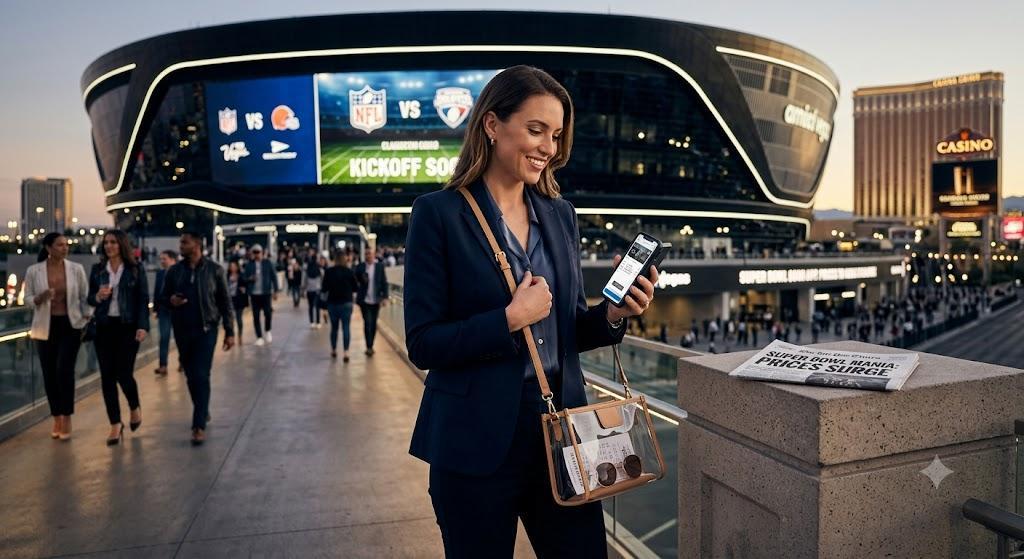
Thankfully, companies like Hammitt have started making stadium-legal clear bags that actually look good. They are using better materials now, so you get nice touches like real leather accents, gold hardware, and zippers that actually hold up when it gets freezing cold outside. Heritage labels—think Coach or Tory Burch—also recognized the demand, dropping beautiful transparent silhouettes pulled straight from their archives. The catch? Purchase one well before October. Every chic, environmentally conscious option sells out the minute the regular season schedule drops in the spring. A modular inner privacy pouch easily hides your personal items, allowing you to bypass the metal detectors without sacrificing an ounce of your aesthetic.
Death to the Charcoal Grill: The Era of Turnkey Gluttony
Dragging a ninety-pound cooler across an asphalt lot at dawn sounds like absolute torture for a cross-country traveler. Fortunately, the hospitality sector completely eliminated that manual labor. Companies like REVELxp have weaponized game day by offering turnkey VIP tailgates right on the premium lawns outside the stadium. Guests arrive at a high-peak tent fully stocked with lounge furniture, digital media walls playing the early network broadcasts, and catered regional food.
Whether that translates to eating spicy crawfish étouffée near the Caesars Superdome or devouring Mission BBQ outside Acrisure Stadium in Pittsburgh, the culinary execution is flawless and zero-effort. When kickoff approaches, attendees just abandon the setup. The local crew breaks everything down and handles the trash, clearing the path for a seamless stroll through the VIP gates.
Biometrics and the Myth of the Concourse Queue
Once you clear the outer security perimeter, the friction should drop to absolute zero. Professional franchises are pouring serious capital into biometric identity platforms like CLEAR to eliminate ticketing bottlenecks entirely. Facial authentication can process up to fifty fans a minute per gate. A quick glance at a biometric lens verifies your identity in milliseconds, letting you walk right past the masses fumbling with their frozen touchscreens.
Inside the gates, the digital ecosystem handles everything else. You really need to download the NFL OnePass app just to find your way around these giant stadiums now. It basically works like a map to help you find your suite or track down a decent cocktail. And here is a pro tip you cannot ignore: save your tickets to your Apple or Google wallet while you are still at the hotel. As soon as you get close to the gates, your phone will lose service because tens of thousands of people are all trying to post photos at the exact same time.
The Chef-Driven Culinary Revolution
The era of the stale pretzel and the tragic cheese pump is mercifully over. Mega-venues are treating their concourses like high-end restaurant incubators. Look closer and you will find Michelin-starred execution happening directly next to the team store. Los Angeles luminaries Jon Shook and Vinny Dotolo designed massive underground kitchens beneath SoFi Stadium to handle the immense volume. They push out flawless Tempura Stuffed Peppers drizzled in eel sauce, alongside an absurdly decadent "Twinkie Burger."
Vegas operators took a different route at Allegiant, importing proven Strip staples like Border Grill to sling smoked brisket burritos and elite birria tacos. Ticket prices command a premium, so the food finally mirrors that high-stakes financial reality. Just remember to aggressively chug water alongside those heavy culinary investments. Thirst masquerades as hunger and severely compounds travel exhaustion—a brutal combination when you mix suite cocktails with a high-altitude flight home.
The Sunday Night Exit Strategy
Surviving Sunday requires you to treat your body like the professionals down on the turf. Travel alone throws off your sleep schedule, but when you mix jet lag with the loud, chaotic environment of a stadium, your Monday is going to be incredibly rough if you aren't careful. Wear your compression socks on the plane and make sure you have a good sleep setup at the hotel—white noise is your best friend.
The modern football getaway is no longer just a passive sporting event. It functions as a highly curated, ruthless exercise in spatial economics, sartorial planning, and luxury execution. Women driving this sector expect frictionless entry, Michelin-adjacent food, and hotels that actually respect our time. Any operator, hotelier, or stubborn travel companion failing to match this new baseline gets left behind in the parking lot.